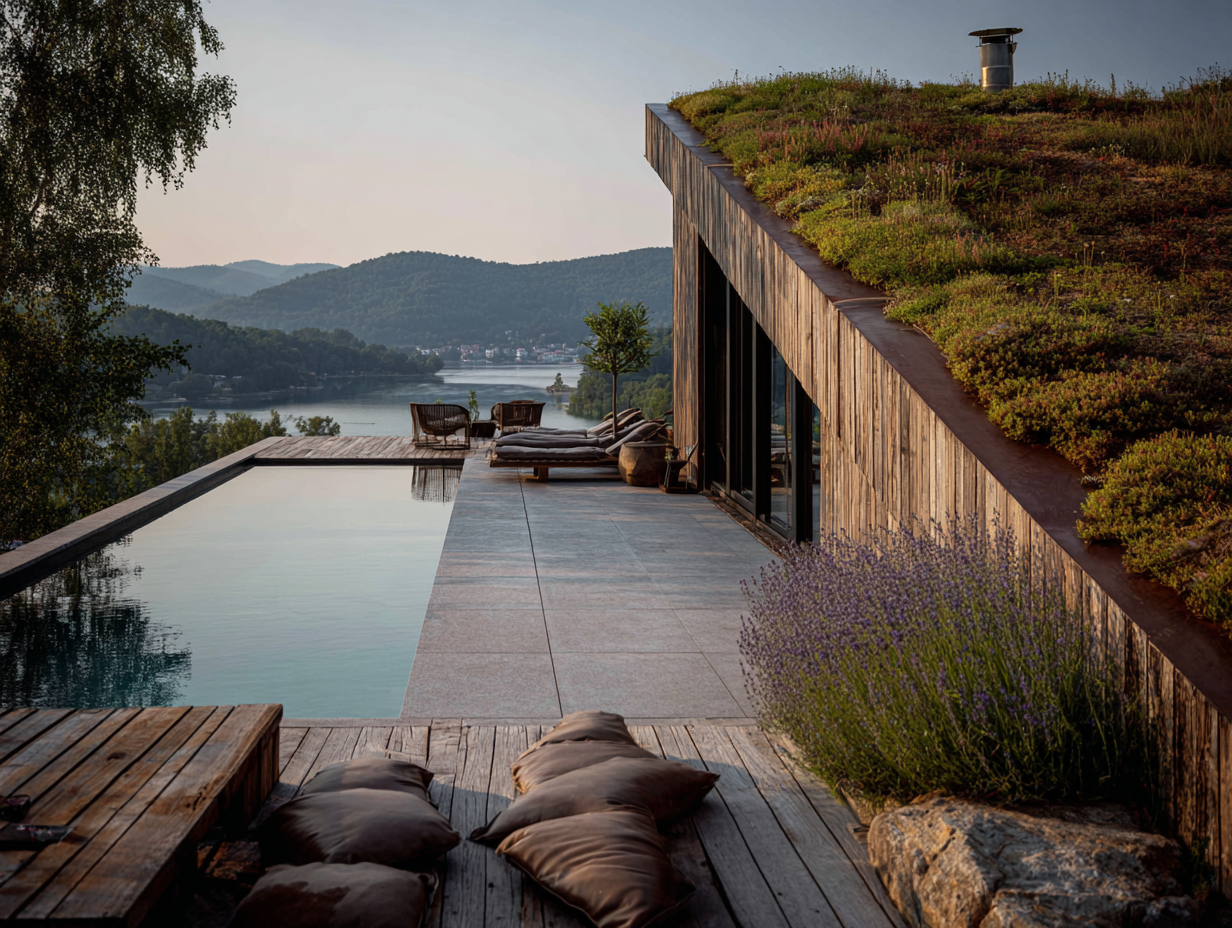
This residential landscape concept is designed as a transition zone between contemporary architecture and a forested alpine setting. The landscape frames the building while maintaining a clear visual and spatial connection to the surrounding woodland, emphasising calm, continuity, and material coherence.
The design relies on a structured yet natural planting strategy. Evergreen trees establish a strong vertical backdrop, while shrubs, grasses, and perennials soften the edges and guide movement across the site. The composition follows the existing topography, using subtle level changes and restrained hardscape elements to shape outdoor spaces without imposing on the natural character of the location.
Materials and planting are deliberately limited, allowing texture, light, and seasonal change to define the atmosphere. The landscape acts as a quiet mediator between architecture and nature, evolving while preserving clarity and order.
Factsheet
Status: Concept design / visualization
Scope:
– Landscape concept and spatial structure
– Planting strategy and material coordination
– Integration with architectural volumes
Landscape Character:
– Calm and restrained
– Strong connection to forest context
– Seasonal and long-term oriented
Materials:
– Mineral paving and concrete elements
– Timber-related architectural interfaces
– Simple retaining and edge details
Planting Concept:
– Evergreen trees as spatial anchors
– Shrubs and grasses for depth and softness
– Perennials with seasonal variation


Client:
The Atlas Project
Key Aspects:
– Landscape as a transition between architecture and forest
– Clear spatial layering and circulation
– Minimal intervention, maximum coherence
– Long-term, low-maintenance planting strategy
CREDITS:
Landscape Architecture: LILE | Landscape Architecture
Visualisation: Concept rendering